

If you’re weighing whether to add Bryce Canyon National Park to a family road trip, here’s the short answer: yes. It might be the easiest national park to visit with kids.
The overlooks are short walks from the parking lot. The shuttle system is free. And the Junior Ranger program is one of the best in the National Park Service.
You just need to plan around altitude, sun exposure, and a few trail sections. Some spots call for close supervision near cliff edges.
Here’s what to actually expect. We’ll cover which trails suit which ages, and how to make the most of a day (or two) with kids in tow.
Why Bryce Canyon Works So Well for Families
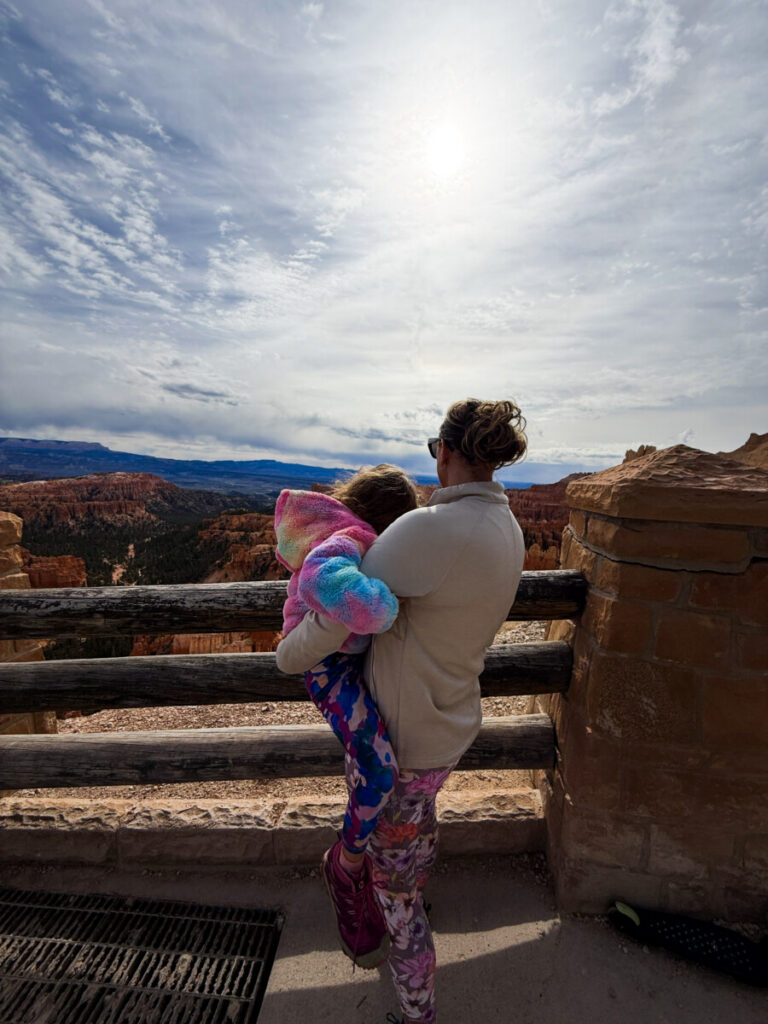
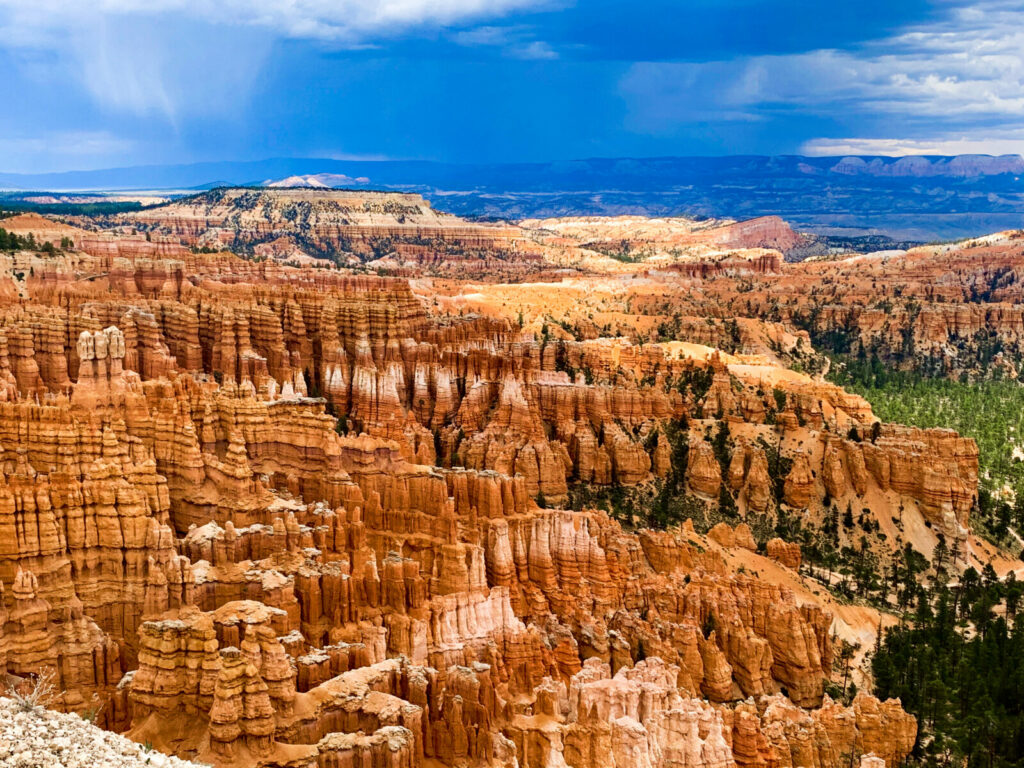
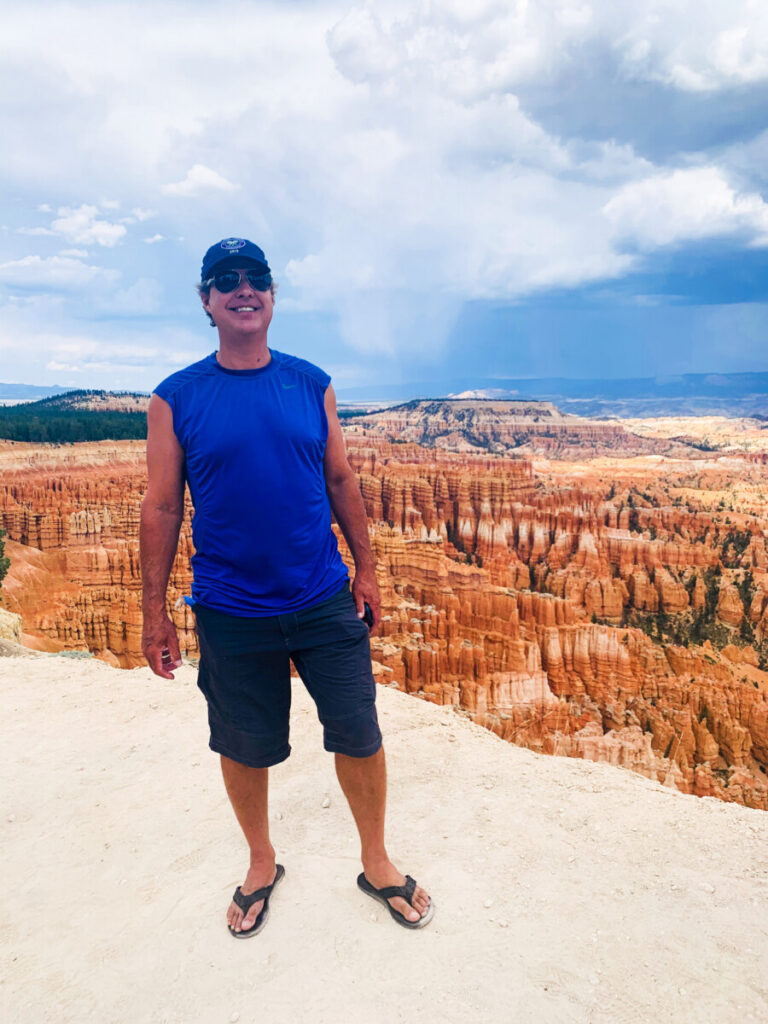
Unlike parks where the payoff requires miles of hiking, Bryce Canyon’s main attraction is visible from parking-lot-adjacent overlooks. Thousands of orange and pink limestone spires, called hoodoos, fill the amphitheater below.
Inspiration Point, Sunset Point, and Bryce Point all deliver a genuine “whoa” moment. Each is within a two-minute walk of a shuttle stop.
That means even toddlers or reluctant hikers get the full visual payoff. Nobody has to get tired or cranky first.
The park also runs a free shuttle along the main amphitheater route. You won’t be circling for parking with a napping kid in the back seat.
Shuttles run every 15 minutes from 8 a.m. to 6 p.m., with extended hours in summer. Stops include Ruby’s Inn, the visitor center, Bryce Canyon Lodge, and the main viewpoints.
Best Trails for Kids
Rim Trail (Sunset Point to Sunrise Point). About 1 mile round trip. It’s paved and mostly flat.
This is the move for toddlers, strollers, or anyone who wants the views without the climb. It stays at the rim, so there’s no descent into the amphitheater.
Queen’s Garden Trail. The NPS recommends this as the best first hike into the canyon for families. It’s the least steep of the routes that drop below the rim.
Switchbacks are carved through the hoodoos rather than a straight descent, which makes the grade easier on small legs.
Queen’s Garden to Navajo Loop combo. This is the classic Bryce Canyon family hike. It runs about 2.75 miles round trip with roughly 620 feet of elevation change.
The park recommends going down Queen’s Garden and up Navajo Loop. Navajo’s switchbacks are steeper, and they’re easier to climb than to descend.
This combo is a good fit for kids around 6 and up. They should be able to handle a couple of hours of hiking with breaks.
Mossy Cave Trail. A short, low-elevation option near the park’s east entrance. It’s good for younger kids or as a second, easier hike later in the trip.
The trail leads to a small waterfall and a shaded overhang. It’s genuinely mossy in summer and icy in winter.
One practical note: as of early 2026, mudslide damage has closed sections of the Wall Street portion of Navajo Loop and the Two Bridges trail. Call the visitor center the day before your visit to confirm what’s open.
For a deeper dive into age-by-age hiking picks nearby, check our Zion National Park with kids guide.
The Junior Ranger Program Is a Genuine Highlight
Bryce Canyon’s Junior Ranger program is worth building time around, not just squeezing in. Kids ages 3 and up pick up an activity book at the visitor center.
They complete age-appropriate activities and attend at least one ranger program. A ranger then swears them in and hands over the badge.
It’s a real confidence boost for kids. It also gives the visit a sense of accomplishment beyond just looking at rocks.
There’s a scavenger-hunt bonus too. The park has hidden nine “I Hiked the Hoodoos” medallions on interpretive signs along popular trails.
Kids who find three and take a pencil rubbing or photo can claim a small reward at the visitor center. It’s a nice incentive for reluctant hikers.
What to Plan Around
Altitude. Bryce Canyon sits at 8,000 to 9,000 feet, noticeably higher than nearby Zion. Kids and adults can tire faster or feel mildly short of breath.
This is especially true on the climb back up from the amphitheater floor. Build in more water breaks than you’d expect to need, and skip the most ambitious hike as your very first activity if you’re coming from sea level.
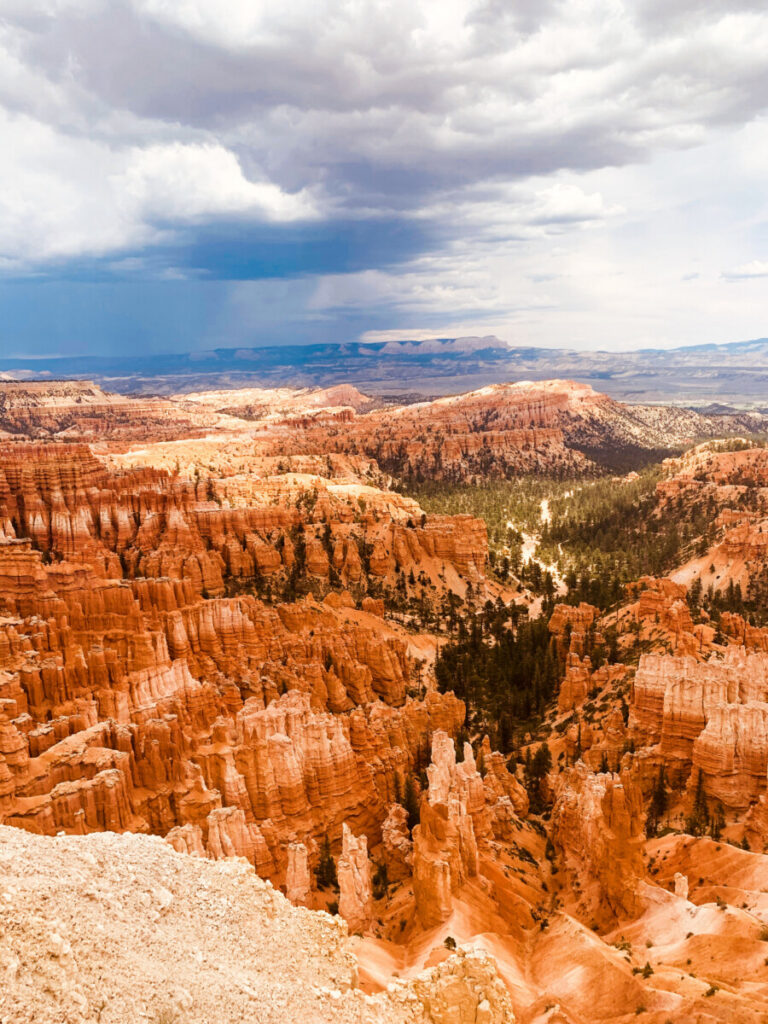
Sun and weather. There’s very little shade along most trails. Weather can shift fast: thunderstorms are common on summer afternoons, and it can snow even in spring and fall.
Pack hats, sunscreen, and a rain layer regardless of season. Morning hikes also beat the afternoon heat and the crowds.
Cliff edges. Some overlooks and trail sections have minimal railing right at steep drop-offs. This is the one place Bryce Canyon requires more hands-on supervision than a typical family attraction.
Keep young kids close, especially at Inspiration Point and along early switchbacks.
Crowds and parking. Peak summer midday sees full parking lots at the popular overlooks. Using the shuttle sidesteps this entirely, and it’s genuinely the easier option with kids.
A Simple One-Day Family Itinerary
Start early at Sunrise or Sunset Point to beat the heat and the crowds. Walk the flat Rim Trail between the two for an easy first view.
If your kids are up for more, drop into Queen’s Garden and loop back up Navajo, weather and closures permitting. Then ride the shuttle to Bryce Point or Inspiration Point for another overlook without more hiking.
Swing by the visitor center in the afternoon for the Junior Ranger badge ceremony. If there’s energy left, Mossy Cave makes a nice, low-key finish.
Stargazing is also a real draw here. Bryce Canyon is one of the darkest parks in the country, and rangers run astronomy programs seasonally that are worth checking the schedule for.
If you’re mapping out other stops nearby, see our Utah national parks road trip itinerary for how to string a few parks together.
What age is Bryce Canyon good for? There’s something for every age. The Rim Trail suits toddlers and strollers, while the Queen’s Garden–Navajo Loop combo works well for kids 6 and up who can manage a couple of hours of walking with breaks.
How much does it cost to enter Bryce Canyon with kids? The standard entrance pass is $35 per private vehicle and covers everyone in the car for 7 days. Kids don’t need a separate ticket.
Is the shuttle required? No, but it’s free and recommended — it eliminates the parking hassle at popular overlooks and runs every 15 minutes during operating hours.
How long do you need at Bryce Canyon with kids? A single well-planned day covers the highlights comfortably. Two days gives room for a slower pace, a second easier trail like Mossy Cave, and evening stargazing.
Bottom Line
Bryce Canyon rewards families without demanding much in return. The views require almost no effort to reach, and the terrain has an easy on-ramp for older kids who want to hike further.
The Junior Ranger program gives the day a satisfying finish. The main things to manage are altitude, sun, and keeping an eye on kids near unguarded overlooks, and none of those are deal-breakers.
If you’re already planning a Utah national parks loop, Bryce Canyon is one of the easiest stops to justify with kids along.
FAQ
What age is Bryce Canyon good for? There’s something for every age. The Rim Trail suits toddlers and strollers, while the Queen’s Garden to Navajo Loop combo works well for kids 6 and up who can manage a couple of hours of walking with breaks.
How much does it cost to enter Bryce Canyon with kids? The standard entrance pass is $35 per private vehicle and covers everyone in the car for 7 days. Kids don’t need a separate ticket.
Is the shuttle required? No, but it’s free and recommended. It eliminates the parking hassle at popular overlooks and runs every 15 minutes during operating hours.
How long do you need at Bryce Canyon with kids? A single well-planned day covers the highlights comfortably. Two days gives room for a slower pace, a second easier trail like Mossy Cave, and evening stargazing.